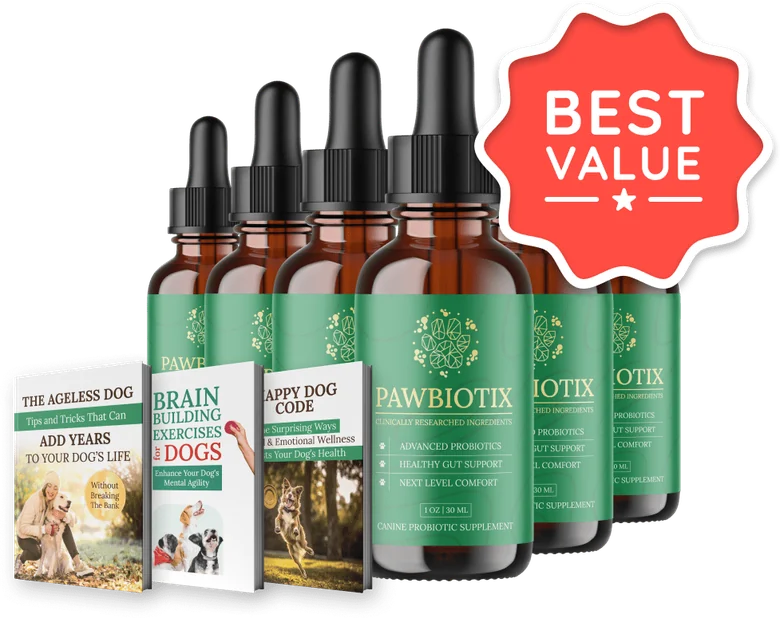
PawBiotix Ingredients
PawBiotix contains 14 declared ingredients: five probiotic strains, a prebiotic fibre, digestive enzymes, and a set of supporting botanicals and algal nutrients.
CFU counts per strain are not published on the pages we reviewed, which limits how directly the blend can be compared against published probiotic research.
Five strains, working together rather than alone
Most budget dog probiotics lead with a single strain. PawBiotix uses five, spanning Lactobacillus, two Bifidobacterium species, Enterococcus faecium and the spore-forming Bacillus coagulans. Strain diversity is a reasonable design choice — different species tend to occupy different niches in the gut, so a broader blend may cover more ground than a single strain alone.
What is not published on the pages we reviewed is the colony-forming-unit (CFU) count per strain, which is the standard way probiotic potency is measured. Without that figure, the strength of any single strain cannot be independently verified.
All 14 ingredients, one by one
Bacillus Coagulans — Spore-forming probiotic
The lead strain, chosen specifically for its ability to survive stomach acid as a spore before germinating in the intestine. This survival trait is the single most important design choice in the formula.
Lactobacillus Acidophilus — Probiotic strain
One of the most extensively studied probiotic species across both human and veterinary nutrition, generally associated with digestive balance.
Bifidobacterium Animalis — Probiotic strain
A species naturally present in the canine gut, commonly included in veterinary probiotic blends for its association with stool quality.
Bifidobacterium Longum — Probiotic strain
A further Bifidobacterium species broadening the strain diversity of the blend beyond a single species.
Enterococcus Faecium — Probiotic strain
Used in veterinary nutrition, sometimes specifically for its association with stool consistency in dogs experiencing occasional loose stool.
Prebiotic Inulin — Plant fibre
Feeds the probiotic strains after they arrive, supporting colonisation rather than leaving newly introduced bacteria without a food source.
Digestive Enzymes — Enzyme blend
Supports the mechanical breakdown of food, particularly relevant for senior dogs whose own enzyme production may decline with age.
Turmeric Extract — Botanical
Included for its curcumin content, widely used in wellness formulas for its association with everyday comfort support. See our piece on turmeric and fennel.
Fennel Extract — Botanical
A traditional digestive botanical, often included in gut-support blends for its association with reduced gassiness and bloating.
Kelp Powder — Algal ingredient
A natural source of iodine and trace minerals, included for general nutritional support and coat condition.
Chlorella — Algal ingredient
A nutrient-dense algae with a broad micronutrient profile, traditionally associated with detoxification support.
L-Glutamine — Amino acid
A primary fuel source for the cells lining the intestinal wall, directly relevant to gut lining integrity and repair.
Palmitoylethanolamide (PEA) — Fatty acid amide
A naturally occurring compound studied for its association with comfort and calm, increasingly used in veterinary wellness formulas.
Sodium Copper Chlorophyllin — Chlorophyll derivative
Sometimes included for its traditional association with odour control and general wellness support.
What to discuss with your vet first
Turmeric and PEA are both generally well tolerated, but any new supplement is worth a quick mention at your dog's next check-up, particularly if your dog is on medication, has a diagnosed digestive condition, or is very young, very old, pregnant or nursing. See how the formula is meant to work next.